
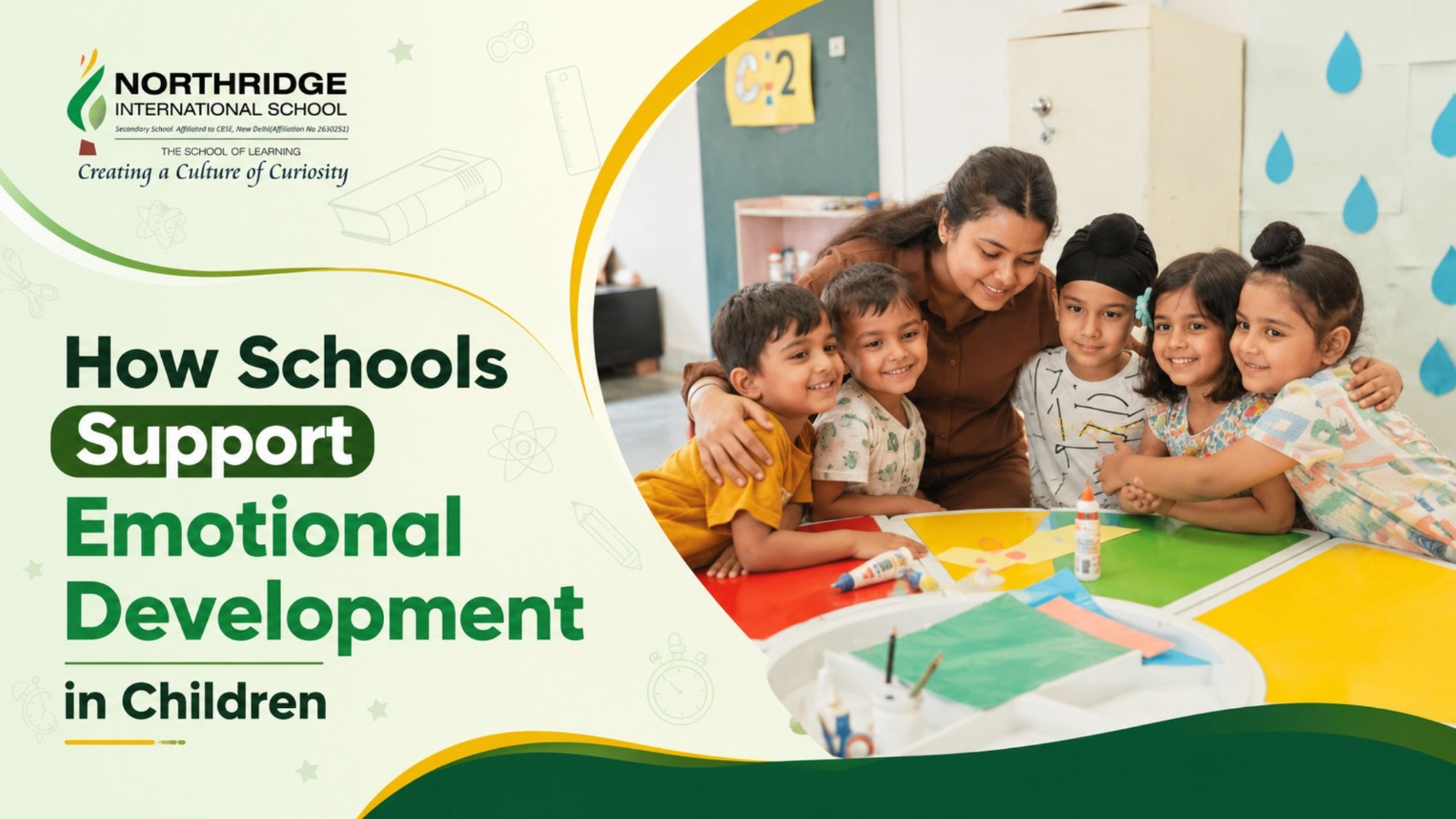
Emotions develop during childhood. While grades and academic textbooks do play an important role, a child’s ability to control emotions is equally important. The way children interact with other people, recover after negative experiences, and feel about themselves also determines how they will live further. Schools influence them greatly because they spend many hours there each day.
As a Best School in Chandigarh, Northridge School recognizes the importance of emotional development. We believe psychological maturation is essential for educational and social growth. Students develop emotional intelligence in schools having a caring and supportive environment.
The Concept of Emotional Development in Childhood
Emotional development can be defined as the capability of the individual to acknowledge and manage his emotions and feelings correctly. It entails having a good perception of other people’s feelings, showing empathy, and forming relations.
Children that receive excellent emotional encouragement tend to:
● Deal with stressful situations
● Form healthy friendships
● Communicate efficiently
● Gain self-esteem
● Think responsibly
● Adjust accordingly
How Schools Influence Emotional Health
Schools indeed fulfill academic needs by teaching students to read and write. However, they are also responsible for shaping a child emotionally. While parents are the first to teach children about emotions, schools come next. They teach through practical experience and daily interaction.
Safe and encouraging atmosphere
The first step to attaining healthy emotions is being safe and feeling accepted. Learning institutions that have caring teachers and proactive classmates help children acquire essential life lessons. Mindsets tend to grow healthy when they feel open to express themselves. Only when they are comfortable do they participate wholeheartedly in classroom discussions. This sense of safety is important and is developed with favorable support from school teachers and other staff members.
Positive relationships in school
Students are provided with many opportunities to develop relationships with other students and teachers within schools. Students learn various emotional skills through such interaction. For example, they realize how to respect different viewpoints and how to handle conflicts. When relationships are strong, students feel more connected. Their bonding with others affects their emotional health and confidence level.
Self-conscious traits
Self-confidence and self-respect are an intrinsic part of the emotional well-being of any person. Educational institutions help develop such qualities through encouraging them to capitalize on their abilities. They appreciate the child’s attempts and even reward them for success. Kids possess unique abilities. Schools help them to identify their capabilities via extracurricular and cultural events. Children honoured by teachers and friends are more confident in their abilities.
Emotional awareness
Emotion management is an essential skill in one’s life that kids keep developing while they are in school. Schools teach students how to understand and regulate emotions appropriately. In discussions and group work sessions in class, students are taught how to understand their emotions like being happy, frustrated, disappointed, excited, and anxious. Students can learn how to regulate these emotions and use them positively so that they can act upon situations and not just react to them. It becomes easier for students to deal with academic pressure and other difficulties when they have self-regulation skills.
Problem Solving abilities
Challenges and failures are likely to come in life anytime, irrespective of age. Schools directlly/indirectly train youngsters to face obstacles with confidence and tenacity. In academics or friendships, when adolescents feel disappointed, they learn important lessons about perseverance. School teachers often urge students to consider problems as learning opportunities rather than hurdles. This resilience enables youngsters to observe situations and recover without anxiety.
Life essential skills
Schools also provide some very interesting opportunities for the growth and development of some important life skills. For example, sports clubs in schools enable a child to work together and focus. Likewise, the mediums of arts and music can serve as excellent ways for exploring their talent. With the involvement in extracurricular activities, children get a chance to showcase their creativity along with boosting self-confidence. This makes up for a well-balanced education promoting good emotional health.
Preparing for Life
Achievements at school combined with social environment influence emotional well-being. Kids who can manage their emotions as well as handle challenges can have a successful life. Education institutions that value both emotional well-being and academic achievements help in raising responsible adults. The qualities that they develop during school years come into use during career development and employment tenure.
Conclusion: Best School in Tricity
Emotional well-being is a vital component of a child’s entire development. It determines how individuals learn, form relationships, and deal with life’s obstacles. Schools also play a vital role in helping kids develop confidence and effective communication skills. Supportive surroundings and opportunities for personal growth in schools all contribute to the development of emotionally strong individuals.
Northridge CBSE School in Chandigarh believes that education is more than just textbooks and tests. As a Best School in Chandigarh, we are committed to fostering every aspect of a child’s growth by creating a learning environment that encourages both academic excellence and emotional well-being. We assist students in developing the skills necessary for success in school and beyond by encouraging self-awareness, confidence, and meaningful connections. Choosing a school that prioritizes emotional well-being can have long-term consequences for a child’s achievement and happiness.
 Day
Day Lunch
Lunch